

When They Were Young: Pianist Vivian Fang Liu, Born in Guiyang, China
By Eileen Bluestone Sherman

Vivian, I know you were born and lived in China for the first 15 years of your life. You have such a beautiful voice. Do you remember singing as a little girl? Could you share with us any particular early childhood songs you especially liked?
I was born in Guiyang, a beautiful city in southwest China, often referred to as the 'City of Mountains.' My parents have always loved singing, so I started singing from a very young age. I remember singing very loudly while sitting on my dad's shoulders as he walked through the streets. People would smile and look at me, and he would gently tell me, 'Sing softer, baby!' One of my favorite childhood songs was 'Pan Ge' (Ask Song), a lovely children’s song from the Miao minority. It’s about asking questions about nature, and it always brought me joy to sing it."
I read that it was your mother who encouraged you to learn the piano, explaining to you that if you knew the piano, you would never be lonely. I love that story. Did you understand her logic as a little girl, or did it take some growing up to appreciate that wisdom?

Wow, thank you for taking the time to listen to my story. Yes, it was my mom who encouraged me to learn the piano. She always said that music would be my constant friend, and that no matter what, I’d never be lonely. Whether I was happy, sad, or feeling alone, I could always turn to the piano. Music would always be there to comfort me. When I was younger, I didn’t quite understand what she meant, but after coming to the United States by myself, I truly began to appreciate it. I found myself feeling lonely and sometimes sad, but whenever that happened, I would sit at the piano and write songs. And when I’m happy, I play too. Music has always been there for me during the highs and lows, and in many ways, it saved me.
Today, you are an award-winning music educator and children’s choral director. Did you participate in choirs as a little girl, and do you model your style from a teacher you admired as a little girl? Do you have a fond choir memory you could share with us?
I was chosen to be part of a children’s choir when I was little. I was very shy back then, but singing with the choir helped me open up—it taught me how to connect with others and introduced me to so many beautiful songs beyond the typical children’s tunes. We performed on TV shows, at ceremonies, and local community fairs.

One memory that stayed with me was the time I got hurt—a flying stone hit my left eye. The doctor had to cover it, and I looked like a little one-eyed Captain Jack. I was so scared to go back to choir practice because I thought the other kids might laugh at me. But with my parents’ encouragement, I went, and what I found was kindness. The teachers and students didn’t make fun of me. They welcomed me with warmth and treated me with such care. That experience showed me the power of a loving and inclusive environment. I carry that lesson with me to this day. I want my choir to feel like a big family, where everyone belongs and we grow together, lifting each other with music and love.
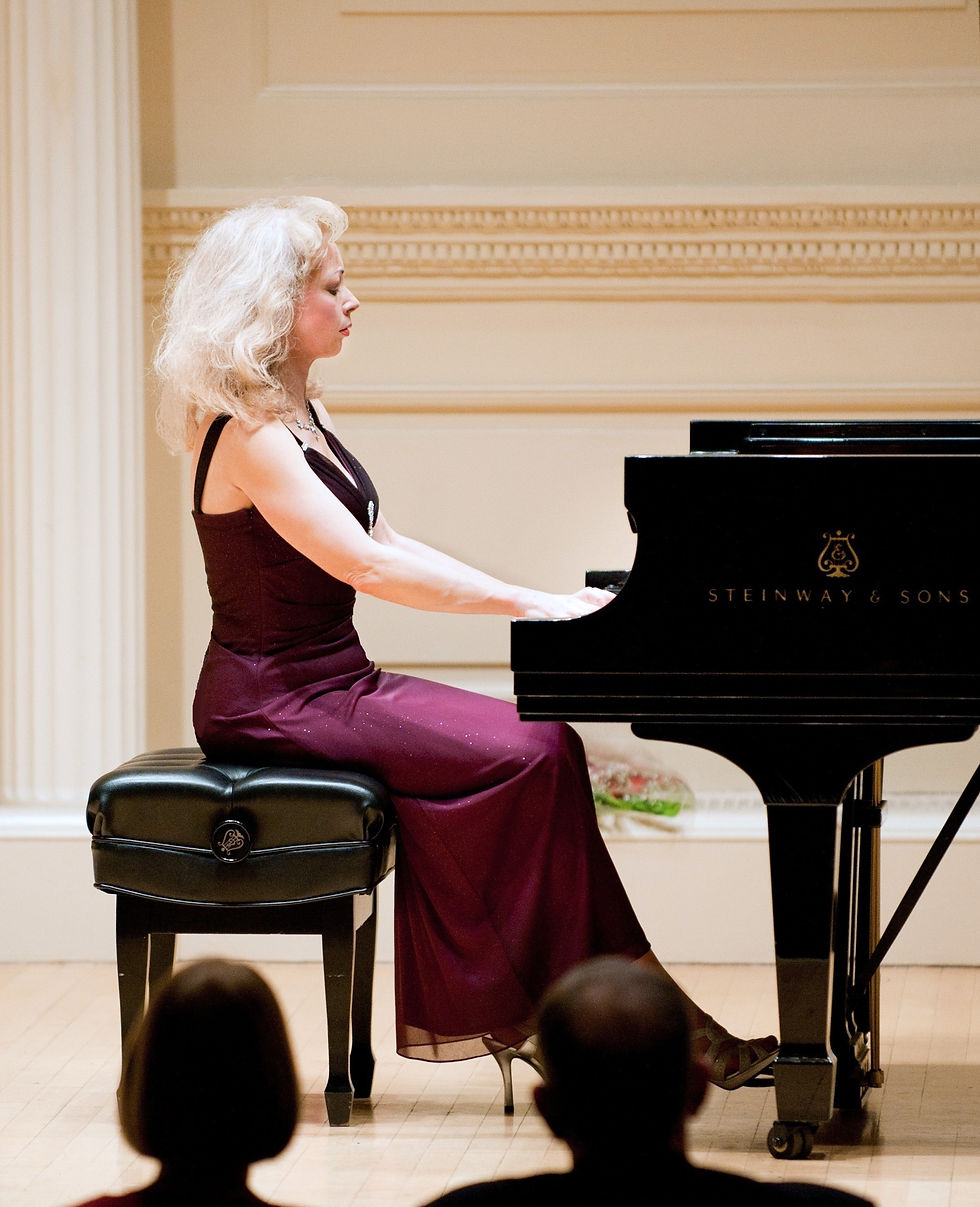
Besides your beautiful costuming on stage, I have delighted in seeing the exquisite and very detailed costuming that your students wear in performance. Do you also have a background in costume design? Does music automatically inspire you to think visually? As a little girl, did you grow up wearing such ornate costumes in performances, and has that shaped your theatrical look for your students when they perform on stage?
Thank you so much for noticing—that means a lot to me! I don’t have a formal background in costume design, but I’ve always loved drawing and visual arts. I genuinely believe a performance is most potent when sound and visuals come together to create a complete experience.
When I was a little girl, my teacher always emphasized the importance of wearing a formal outfit for piano performances. She taught me that how you present yourself visually is part of the music, too. That lesson stayed with me. Now, when I prepare for a concert, I let the style of music guide the costumes—it’s become one of the most fun and creative parts of the process! I love extending that joy to my students, as well, helping them feel special and confident on stage.

I know you came to the United States, all by yourself, at the age of fifteen. What prompted that decision? Were your parents always preparing you for that move, or was it a more spontaneous decision? Can you describe what that period of adjustment was like and how your music influenced your new life in the United States?
Before I came to the United States, I had been studying piano for many years. I was accepted into the pre-college program at one of China's most prestigious music conservatories. One of the professors there introduced a life-changing opportunity: an audition for a school in the U.S. If I passed, I could continue my music studies in America.
My parents saw it as a once-in-a-lifetime opportunity. After all, the piano is a Western instrument, and they believed I could gain a deeper understanding by studying and being a pianist in the West. I took the audition, was accepted with a scholarship, and at just fifteen years old, I moved to the United States on my own.
It was a tough transition. I had to adapt to a new culture, take care of myself, and overcome the language barrier—all without my family nearby. But music was always there for me. I practiced piano at my landlord’s house, and her son became my very first student. When he won a piano award, his friends started coming to me for lessons too. (I was only a few years older than they were, so they used to call me “sister teacher,” haha!) That’s how I began teaching at fifteen, and the income helped me cover many of my living expenses. At that same time, my mom was diagnosed with cancer back in China. I was so grateful I could lighten the financial load, even just a little.
Music truly saved me. It gave me a sense of purpose, connection, and strength during one of the most challenging and defining chapters of my life.


Comments